

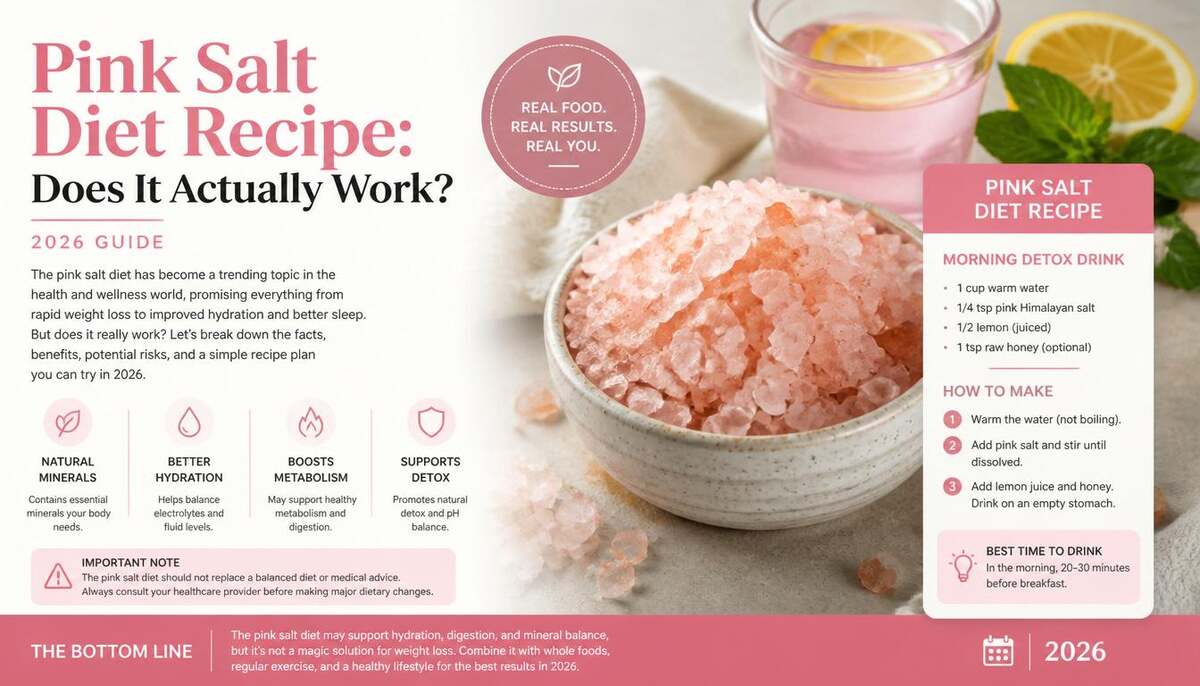
The pink salt diet recipe is the viral morning drink taking over your feed: water, a pinch of pink Himalayan salt, and usually a squeeze of lemon, sipped before breakfast in hopes of a flatter stomach by lunch. Here’s the direct answer it doesn’t work.
Dietitians and fact-checkers who’ve actually looked into the science agree it won’t boost your metabolism, melt fat, or detox anything, and for some people the added sodium makes bloating worse, not better.
It can also be genuinely risky if you’re managing high blood pressure, heart failure, or kidney disease. Stick around anyway, because the recipe itself isn’t the real story here what it’s doing to your body, why it’s suddenly everywhere, and what actually works instead is where this gets interesting.
What is the pink salt diet recipe?
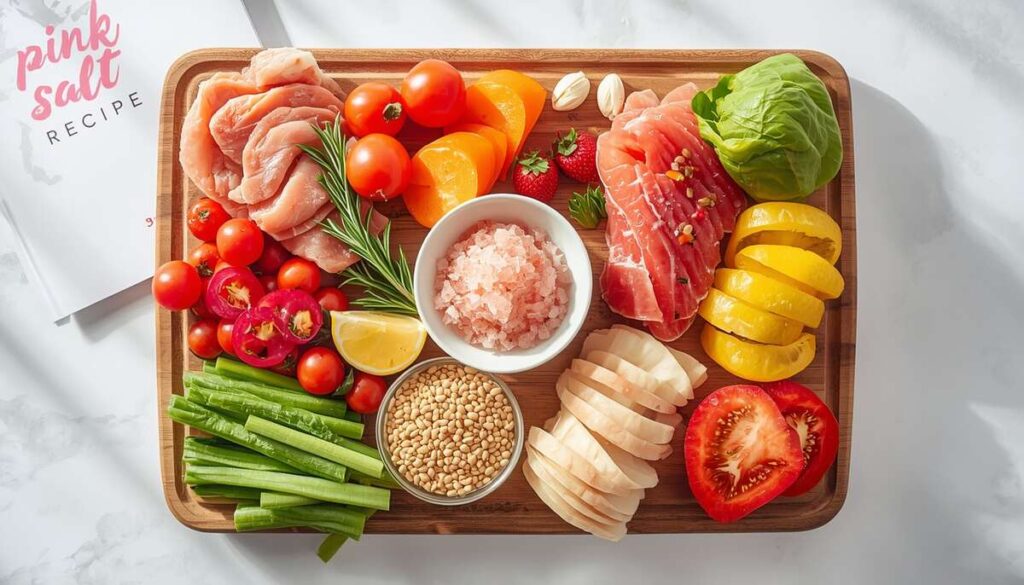
Strip away the hype and it’s about as simple as recipes get: a glass of water (usually 8 to 16 ounces), a small pinch of pink Himalayan salt somewhere between 1/16 and 1/4 teaspoon and often a squeeze of lemon. People tend to knock it back first thing in the morning, before coffee, before breakfast, before anything else.
You’ll see it under a handful of names the pink salt trick, the Himalayan salt trick,”sometimes just “the pink salt diet. Whatever it’s called, the sales pitch stays the same: drink this before you eat anything else, and your metabolism supposedly kicks into gear, your bloating disappears, and your body starts detoxing.
Does the pink salt diet recipe actually help you lose weight?
Short answer: no. Nothing about mixing pink salt into water triggers fat loss, revs up your metabolism, or detoxes anything. And it’s not just one dietitian saying so every credentialed expert who’s actually looked into this lands in the same place
Here’s the part nobody mentions in the videos: extra sodium can work against you. Your body holds onto water when sodium goes up, and that shows up as puffiness and bloating the exact opposite of what people are chasing.
If someone genuinely drops weight while doing this, odds are it has nothing to do with the salt. Maybe they cut out their usual sugary latte. Maybe they’re eating a bit less without noticing.Maybe they’re just drinking more water overall. Whatever’s actually happening, the salt isn’t the reason it just happened to be there when the change did.
Plain water, on its own, does earn some credit here sipping it before a meal can genuinely help you feel fuller. But that’s water doing its job, not pink Himalayan salt adding some secret ingredient.
Also Read : Blackberry Juice Fresh Recipe Health Benefits and Complete Guide
Whyis everyone talking about pink salt right now?
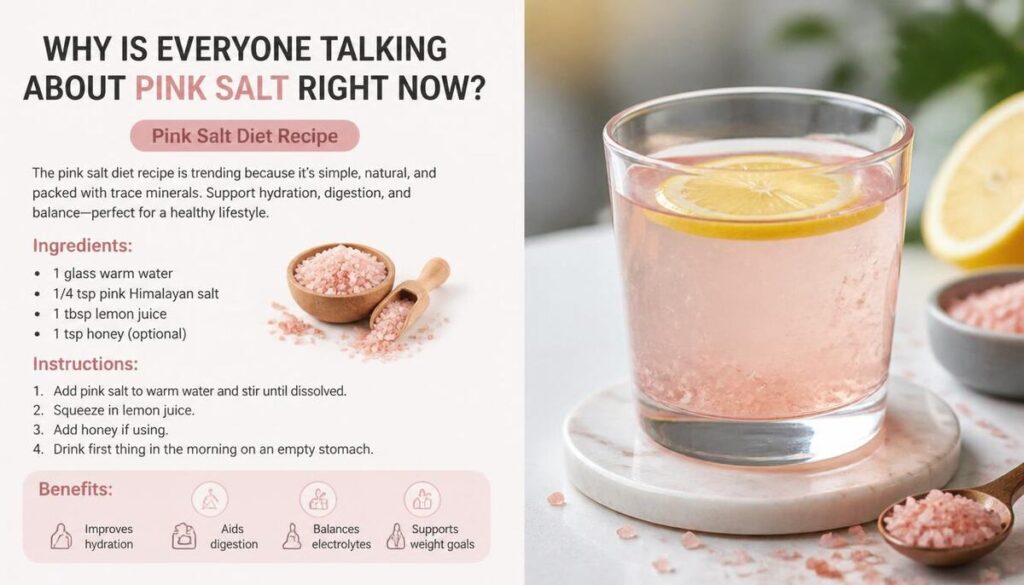
This one really took off through 2025 and into 2026, usually framed as a morning tonic and often mentioned in the same breath as the adrenal cocktail that other viral mix of orange juice, coconut water, and salt that’s supposed to lower cortisol. Spoiler: there’s no real research backing that one up either.
Notice the pattern? Take a simple, easy-to-film drink, attach a few real-sounding science words like metabolism, cortisol, or electrolytes, and skip the part where actual clinical research would need to exist. It works every time, at least for views.
Why do women seem to love the pink salt trend so much?
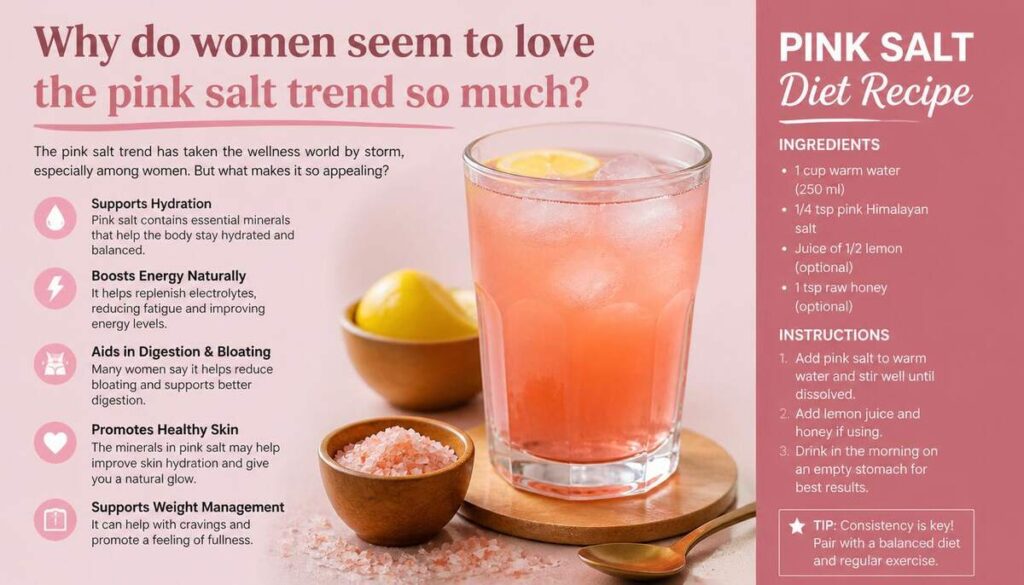
This trend skews heavily female, and that’s a marketing story more than a biology one. A lot of wellness content built for women has leaned into morning routine content the lemon water, the cold plunge, and now the pink salt tonic because these rituals are easy to film, easy to romanticize, and slot right into an existing self-care routine.
A few reasons it clicks specifically with women:
- The hormone angle. Pink salt content gets paired constantly with cortisol and adrenal talk, which resonates with anyone dealing with stress, fatigue, or the hormonal shifts that come with cycles, postpartum recovery, or perimenopause.
- It feels doable. One extra ingredient in your morning water feels a lot more sustainable than another restrictive diet, especially after years of diet culture pushing plans nobody could stick to.
- Everyone’s doing it on camera. When a wellness creator you trust films herself doing this every morning, it reads as tested and safe even when there’s zero clinical evidence behind it.
- It’s pretty. Sounds silly, but pastel, photogenic products just perform better in wellness marketing aimed at women, and pink Himalayan salt happens to fit that aesthetic perfectly.
None of that translates into the drink doing anything different in a woman’s body versus a man’s. The pull here is cultural, not physiological worth remembering before assuming there’s some hormone-specific reason it works better for women. There’s nothing in the research to support that idea, either.
Claimed Benefit vs. What the Evidence Actually Shows
| Claimed Benefit | What the Evidence Shows |
| Boosts metabolism | No evidence sodium affects metabolic rate |
| Melts fat / burns fat overnight | Not physiologically possible from salt intake |
| Reduces bloating | May worsen bloating due to water retention |
| Detoxifies the body | Liver and kidneys already handle detoxification; salt has no role |
| Improves hydration | Plain water does this more reliably, without the sodium load |
| Safe for everyone | Not safe for those with hypertension, heart failure, or kidney disease |
Pink Himalayan salt vs. table salt: what’s the real difference?
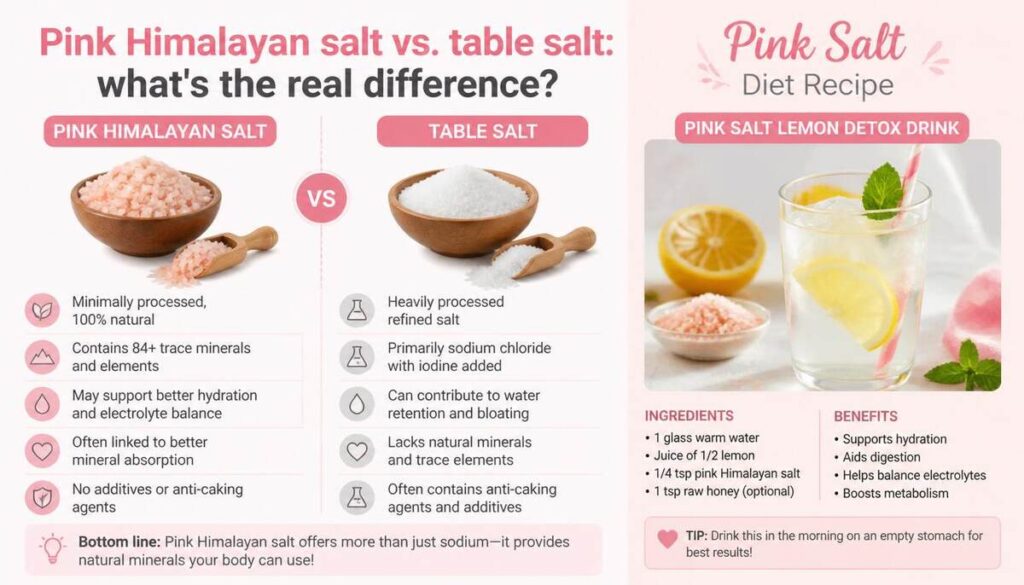
Yes, pink Himalayan salt carries trace minerals magnesium, potassium, calcium, iron and that’s exactly what gives it the pink color. But the quantities are so small they don’t move the needle nutritionally compared to regular table salt.
If anything, table salt has the edge in one meaningful way: it’s iodized, and most pink Himalayan salt isn’t, which matters because iodine keeps your thyroid functioning properly. TheNational Academies’ Dietary Reference Intakes for sodium, maintained through the NIH, back this up your body doesn’t care what color the salt is. Sodium is sodium.
Want the full side-by-side? Check Table 1 below.
`Pink Himalayan Salt vs. Table Salt
| Factor | Pink Himalayan Salt | Table Salt |
| Sodium content | ~98% sodium chloride | ~97–99% sodium chloride |
| Trace minerals | Small amounts of magnesium, potassium, calcium, iron | Minimal |
| Iodine | Typically not fortified | Usually iodized |
| Processing | Minimally processed, hand-mined | Refined |
| Taste | Milder, slightly different mineral flavor | Sharper, more “salty” |
| Price | Higher | Lower |
| Weight-loss effect | None supported by evidence | None supported by evidence |
Is the pink salt diet recipe safe?
One glass, every now and then, isn’t going to hurt a healthy adult. But “safe” gets complicated fast depending on who’s drinking it and how often.
The real issue shows up when a morning ritual quietly becomes a daily habit on top of a diet that’s already sodium-heavy. Per the American Heart Association’s sodium guidance, most adults should stay under 2,300 mg of sodium a day, with 1,500 mg as the better target for most people. A daily pink salt habit is one more sodium source that’s easy to lose track of.
This trend isn’t a good idea if you’re dealing with:
- High blood pressure (hypertension)
- Heart failure
- Chronic kidney disease
- Any low-sodium diet your doctor has already put you on
If that’s you, just skip it. Talk to your doctor before adding extra sodium anywhere in your routine, morning tonic or otherwise.
How to make the pink salt diet recipe (if you still want to try it)
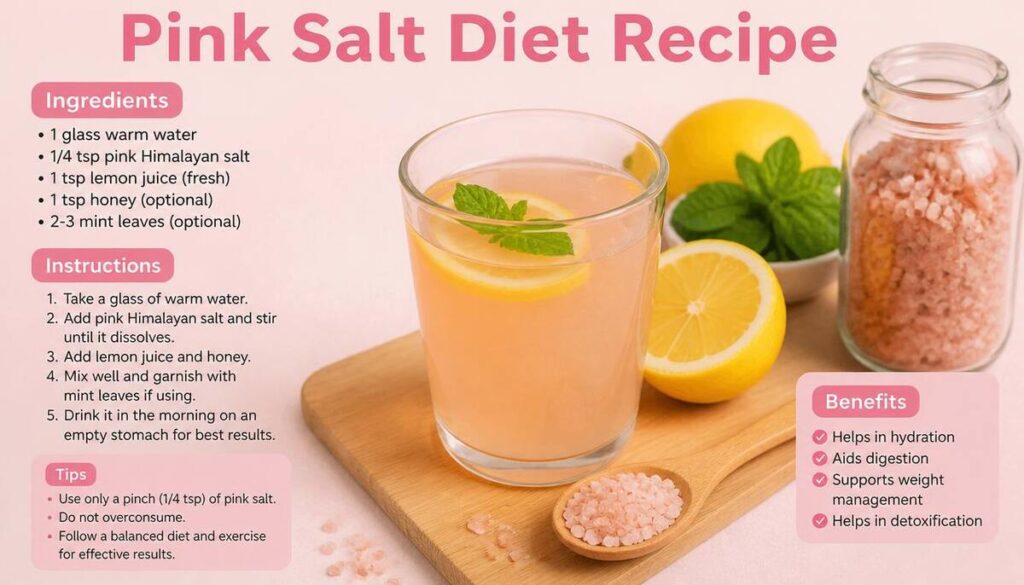
Curious enough to try it anyway? Here’s the version most people use, kept toward the lower end of the sodium spectrum:
Ingredients:
- 12–16 oz room-temperature or warm water
- 1/8 teaspoon pink Himalayan salt
- Juice of half a lemon (optional)
Instructions:
- Stir the pink Himalayan salt into your glass of water.
- Keep stirring until it fully dissolves.
- Squeeze in the lemon juice, if you’re using it.
- Drink it on an empty stomach before coffee or breakfast works best for most people.
That’s really the entire recipe. No fancier version unlocks some hidden benefit. If you like how it tastes and none of the risk factors above apply to you, it’s a low-stakes habit to keep. Just don’t expect your scale to notice.
Smarter alternatives that actually support weight loss
If weight loss or less bloating is the actual goal, here’s where to put your energy instead — these are backed by more than a TikTok caption.
Prioritize protein and fiber
Meals built around protein and fiber keep you full longer, which makes eating in a calorie deficit feel a lot less like white-knuckling your way through the day.
Stay hydrated with plain water
No salt needed plain water supports that feeling of fullness and helps you tell the difference between actual hunger and just being thirsty.
Move your body regularly
Consistent movement, resistance training especially, protects your muscle mass while you lose weight and does more for your long-term metabolic health than any drink ever could.
Prioritize sleep
Skimp on sleep and your ghrelin (hunger hormone) climbs, which makes cravings that much harder to fight the next day.
Talk to a healthcare provider before major changes
A doctor or registered dietitian can build something around your actual health history — especially useful if you’ve got any heart or kidney concerns already in the picture.
Bottom line
A little pink salt in your water isn’t going to hurt most healthy people, but it’s not a weight-loss method either no matter how confidently that’s claimed online. The metabolism and detox promises just don’t survive contact with the actual research.
Like the taste? No reason to stop. Just don’t expect the scale to budge because of it, and skip it altogether if blood pressure, heart, or kidney issues are part of your health picture.
FAQ SECTION
Does the pink salt diet recipe actually help you lose weight?
No there’s no scientific evidence that pink salt causes fat loss, and it can actually cause temporary water-weight gain due to increased sodium intake.
What are the ingredients in the pink salt diet recipe?
The basic recipe is water, a small amount of pink Himalayan salt (around 1/8 teaspoon), and optionally fresh lemon juice.
Is pink Himalayan salt healthier than regular table salt?
Not meaningfully it contains trace minerals in amounts too small to matter nutritionally, and unlike most table salt, it typically isn’t fortified with iodine.
Is the pink salt diet recipe safe to drink every day?
It’s generally low-risk for healthy adults in small amounts, but daily use adds to overall sodium intake and isn’t recommended for people with high blood pressure, heart failure, or kidney disease.
How much sodium is safe in a day?
Most healthy adults should stay under about 2,300 mg per day, while people managing high blood pressure are often advised to stay closer to 1,500 mg.
What’s the difference between the pink salt trick and the adrenal cocktail?
They’re closely related viral drinks the adrenal cocktail usually adds orange juice and coconut water and claims to lower cortisol, but like the pink salt trick, there’s no clinical evidence supporting that claim.

Arlo Scott is a nutritionist and smoothie enthusiast on a mission to make healthy living taste like dessert. Specializing in nutrient-dense superfood blends and post-workout shakes, Arlo helps you fuel your body with vibrant, natural ingredients that actually taste amazing.